
Solo Backpacking: Practical Tips for Beginners
Solo Backpacking Tips: Your Friendly, No-Nonsense Guide to Going It Alone
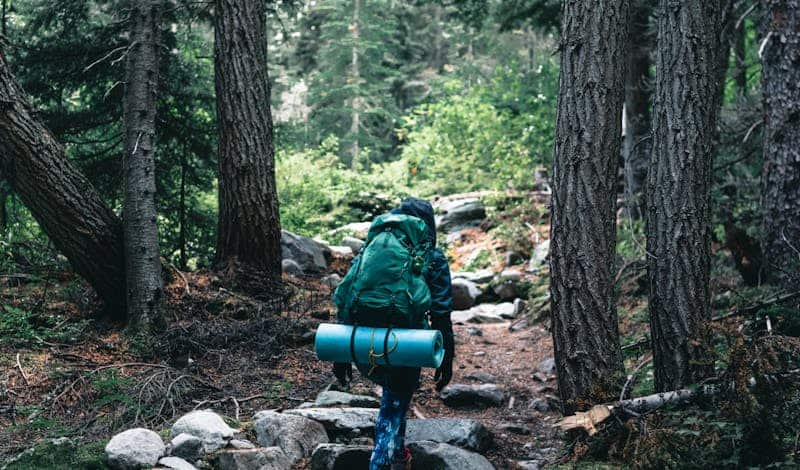
So you’re thinking about heading out on your own. Maybe it’s a quiet overnight on a trail near home. Maybe it’s a one-way ticket to somewhere you can’t quite pronounce. Either way, good for you. That little flutter in your stomach? That’s not a warning sign. That’s the start of something great.
Here’s the truth nobody tells you up front: solo backpacking is one of the best things you can do for your confidence, your perspective, and your sanity. It’s also completely doable, as long as you prepare smart instead of just brave. And that’s exactly what we’re going to walk through together.
This guide covers both flavors of going solo. There’s hitting the backcountry trail with a pack on your shoulders, and there’s backpacking the world with a hostel bed waiting at the end of the day. The mindset is the same. The gear list is a little different. Let’s get into it.
First Things First: Why Solo Backpacking Is Worth It
Let’s get the obvious question out of the way. Is doing this alone actually a good idea?
Short answer: yes. And the research backs it up. Solo travel has gone from niche to mainstream, and it now makes up roughly 11% of all global travel and keeps climbing, according to Hotelagio’s 2025 solo travel data. You’re in very good company. A lot of people are discovering what you’re about to.
But the real payoff isn’t the numbers. It’s what happens to you. Stepping outside your comfort zone, solving problems with nobody to lean on, builds genuine self-confidence and resilience. Hostelworld’s 2025 State of Solo Travel report found that nearly 78% of solo travelers say the experience boosts their confidence, their mental health, or both. And here’s the kicker: 63% of first-timers plan to travel more once they’ve done it. Turns out it’s a little addictive (in the good way).
The other great thing? You go at your own pace. No waiting on the slowest person in the group. No compromising on the itinerary. You wake when you want, walk as far as you want, and linger at the pretty overlook for as long as your heart desires. That freedom is the whole point.
Part 1: Solo Backpacking on the Trail
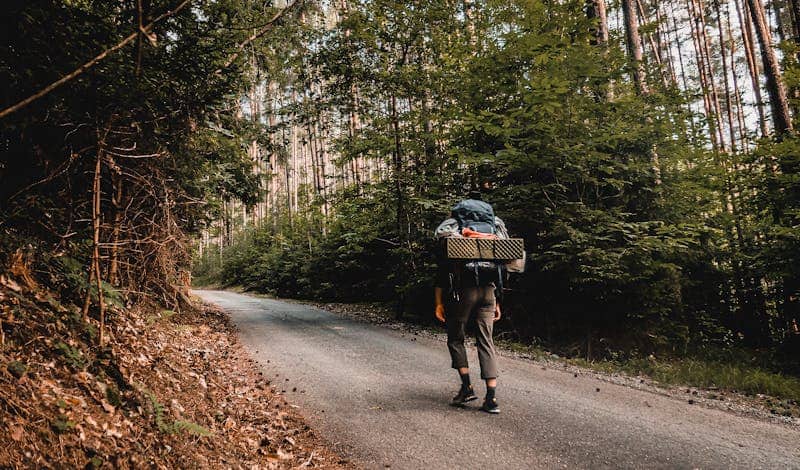
Start Small, Seriously
Here’s the most important tip in this entire article, so I’m putting it right up top: don’t make your first solo trip a big trip.
REI puts it bluntly in their How to Solo Backpack guide: backpacking alone is not for beginners. That’s not meant to scare you off. It’s meant to point you toward the smart on-ramp. Build your skill level in layers, like this:
- Solo day hikes first. A solo day hike on a familiar trail teaches you how it feels to make every decision yourself, with zero overnight commitment.
- Solo car camping next. REI suggests this exact step, because it lets you get comfortable sleeping alone without hiking miles into the wilderness.
- A short solo overnight. One or two nights on a popular trail close to home. Emphasis on popular, and more on that in a second.
- Then, the bigger adventures. Once you’ve got a few successful solo trips under your belt and can navigate confidently, the world opens up.
There’s no rush. Building your own skills takes a little time, and that time is the whole foundation of doing this safely.
Pick the Right Trail (Hint: Closer Is Better)
For your first solo trip, resist the urge to go epic. The REI beginner backpacking guide recommends picking a spot close to home so you spend more time hiking than driving, and erring toward easy. A trail that’s too hard makes for a miserable first experience, and we want you to fall in love with this, not swear it off forever.
A popular trail is your best friend on a first solo hike. Why? Because you’re rarely truly alone. There are other hikers around if something goes sideways, the route is well-marked, and the trail is a known quantity. Save the remote, off-grid wild places for when you’ve got more experience.
Dreaming bigger? The Pacific Crest Trail and the Appalachian Trail are the legendary long-distance routes, and plenty of solo backpackers tackle them every year. Just know those are advanced undertakings, a goal to build toward rather than a starting line. Local trails first, the PCT later.
Tell Someone Your Plan. Every. Single. Time.
If you remember only one thing about safety, make it this. Every authority on the planet agrees on it.
Before you go, leave a detailed itinerary with a trusted friend or family member: your exact route, where you’re parking, and when you expect to be back. REI recommends writing down who to contact and when, if you haven’t returned on time, and even leaving a note with your contact info under the front seat of your car. Pick an emergency contact and agree on a check-in time and what they should do if you miss it.
This is the single cheapest, most powerful safety move you can make. It costs you two minutes and buys you enormous peace of mind.
Pack the Ten Essentials (Your Safety Floor)
You don’t need a closet full of fancy gear to start. But you do need the Ten Essentials, a packing list developed by The Mountaineers and endorsed by both REI and the National Park Service. Carry these even on a solo day hike:
- Navigation: map, compass, and/or GPS
- Sun protection: sunscreen, sunglasses, sun-protective clothing
- Insulation: extra layers for weather that turns
- Illumination: a headlamp, plus spare batteries
- First-aid supplies
- Fire: matches or a lighter and a fire starter
- Repair kit and tools: knife or multi-tool, a little duct tape
- Nutrition: an extra day’s worth of food
- Hydration: water and a way to treat more
- Emergency shelter: even just an emergency blanket
This isn’t the ceiling, it’s the floor. But with the right gear in your pack, most worst-case-scenario situations become manageable inconveniences instead of emergencies.
Don’t Bet Your Life on Your Cell Phone
Here’s a hard truth about the backcountry: cell service is unreliable, and often nonexistent. The National Park Service warns hikers not to count on a cell phone, because there may be no coverage at all, and hunting for a signal drains your battery fast. Their tip: keep your phone in airplane mode until you actually need it.
So how do you call for help when there are no bars? Two great options.
Satellite communicators. The Garmin inReach Mini series is the gold standard: tiny, light, and able to send two-way texts and an SOS from almost anywhere on Earth via satellite. The Garmin inReach Mini 2 weighs about 3.5 ounces and connects to a 24/7 emergency response center. It does require a subscription, but for solo hikers who want to check in with someone at home, it’s hard to beat. (Heads up: Garmin launched newer Mini 3 models in late 2025, so check current pricing before you buy.)
Personal locator beacons (PLBs). A personal locator beacon like the ACR ResQLink sends a distress signal over a government search-and-rescue satellite network, with no subscription required, ever. The trade-off is that it’s SOS-only, with no two-way texting. If you want a pure “get me out of here” button and no monthly fee, a PLB is a fantastic, cheaper-over-time option.
Either way, carrying one of these is the most valuable upgrade a solo backpacker can make. It’s the difference between being stranded and being found.
Water, Weight, and Other Practical Stuff
A few quick wins that make a big difference:
- Treat your water. Don’t drink straight from streams, no matter how clear. REI explains that a filter strains out the bacteria and protozoa (think Giardia) that are the main concern across the U.S. and Canada, and popular picks include the Sawyer Squeeze. Always pack a backup treatment method (purification tablets weigh almost nothing). Camp at least 200 feet from water sources, and never put soap in them.
- Mind your pack weight. A heavy backpack turns a fun walk into a death march. Walking with a loaded pack is slower than day hiking, so plan shorter distances than you think you need.
- Stay close to your own pace. This is the joy of solo hiking: there’s nobody to keep up with. Walk slow, take breaks, enjoy it.
A Quick Word on Bear Country (and Other Wild Animals)
If you’re heading into bear country, a little knowledge goes a long way, and it keeps both you and the bears safe.
Store your food right. The National Park Service is direct about this: proper food storage can mean life or death for a bear. Stash all food, trash, and scented items (yes, including toiletries) in a bear canister, a bear locker, or a properly hung bag, and keep your sleeping area well away from where you cook and store food. Rules vary by park, so always check the local regulations before you go.
Carry bear spray, and know it’s not the same as pepper spray. These are not interchangeable. Bear spray sprays a wide fog up to 30 to 40 feet and is EPA-regulated specifically for deterring bears. Pepper spray for self-defense against humans is weaker and sprays a narrow stream only about 10 feet, as Counter Assault explains. And does bear spray actually work? The landmark Smith and Herrero study of 20 years of Alaska encounters found it stopped unwanted bear behavior 92% of the time, and 98% of people carrying it walked away uninjured from close encounters. That’s a stat worth its weight in your pack.
Know what to do if you actually see one. Per the NPS bear safety guidance: stay calm, talk so the bear knows you’re human, wave your arms slowly, and never run. The response to an attack is species-specific. With a brown or grizzly bear, play dead. With a black bear, fight back, aiming for the face. And if a bear comes after you in your tent? Always fight back. Carry your bear spray somewhere you can grab it fast, not buried at the bottom of your pack.
Permits and National Parks
Many national parks and popular routes require backcountry permits, and some have strict food-storage rules. The Pacific Crest Trail requires a free long-distance permit for big continuous hikes, released on specific dates each year. Don’t get caught off guard. Check the specific park or trail’s website before you go, because these rules change yearly.
Part 2: Solo Backpacking Around the World
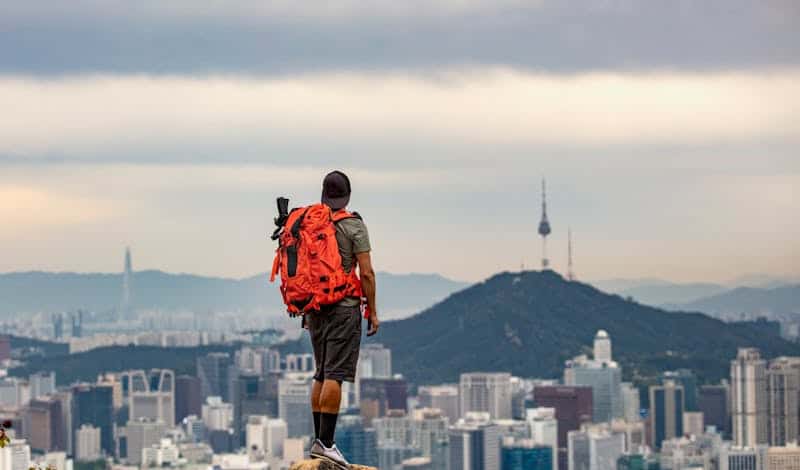
Now let’s swap the bear canister for a passport. Backpacking as a solo traveler through new countries is a whole different kind of adventure, but a lot of the wisdom carries right over.
Ease Into It
Just like on the trail, start on easy mode. For your first international solo adventure, pick a safe, well-trodden travel destination where you know at least a little of the language. Practice your solo habits on a short, nearby trip before you commit to a months-long, around-the-world big trip. There’s no shame in starting small. It’s the smart play.
Travel Insurance Is Not Optional
Let me be the friend who tells you the unglamorous thing: buy travel insurance. Solo Traveler World treats it as a basic, non-negotiable cost of going abroad, because an accident can happen anywhere, and when you’re solo, there’s no travel buddy to handle the fallout.
A few tips:
- Buy it the day you book so you’re covered for pre-trip cancellations.
- Prioritize emergency medical and evacuation coverage above all else.
- Read the fine print on adventure activities. Scuba, climbing, and high-altitude trekking are often excluded.
- Don’t assume your credit cards have you covered. They rarely offer enough medical or evacuation protection on their own.
This one purchase buys an enormous amount of peace of mind. Get it.
Stay Safe and Street-Smart
You don’t need to be paranoid, just prepared. The greatest hits of solo traveler safety:
- Share your itinerary and accommodation details with someone back home.
- Tell hostel or hotel staff where you’re going and when you’ll be back.
- Keep an eye on your drinks, and don’t overdo it.
- Carry only what you need, concealed in a bag you can see. Keep a passport photocopy separate from the original.
- Arrive in new places during daylight whenever you can.
- If a stranger asks whether you’re traveling alone, it’s perfectly fine to say you’re meeting someone.
U.S. citizens can also enroll in the State Department’s free Smart Traveler Enrollment Program (STEP), which registers your trip with the nearest embassy and sends safety alerts. Easy, free, and worth it.
Travel Smart, Spend Less
Solo travel can be wonderfully affordable when you know the moves:
- Stay in hostels. A dorm bed is a fraction of a hotel room, and hostels are social goldmines (more on that next).
- Go overland. Buses and train tickets are usually a much cheaper option than flying, and you actually see the country.
- Cook sometimes. Shared hostel kitchens save serious cash.
- Travel in shoulder season. Spring and autumn mean lower prices and thinner crowds at the best places.
- Tell your bank your travel dates so your cards don’t get frozen, and always carry a backup card and a little cash.
Making New Friends on the Road
Worried about being lonely? Don’t be. Here’s the lovely irony of solo travel: you’ll likely meet more people than you would traveling with a companion.
Hostels are the engine of it all. Look for ones with common areas, shared kitchens, and organized activities like walking tours or group dinners. Hostelworld’s 2025 research found that 71% of solo travelers actively seek connection, and 68% form meaningful friendships on the road. You’ll swap stories, share meals, and walk away with new friends scattered across the globe.
Social media and travel apps are great for planning and meeting up. Just don’t spend your whole trip behind a screen. You came a long way to be here. Look up from the phone.
Respect Local Customs
This is where good travelers become great ones. Every place you visit has its own rhythm, and learning local customs before you arrive is both respectful and practical. As Solo Traveler World advises, take a step back and watch what the locals do before you wade into a public space.
A few universal pointers, echoed by Remitly’s cultural etiquette guide:
- Dress modestly at religious sites. A lightweight scarf is endlessly useful.
- Learn a few basic phrases. “Hello,” “please,” and “thank you” go a long way.
- Ask before photographing people.
- Research tipping norms, dining etiquette, and local laws before you land.
One backpacking-specific note: some countries restrict satellite communicators, so check the local regulations before you bring that Garmin inReach abroad.
A Bucket-List Destination: Machu Picchu
Dreaming of Machu Picchu? Fantastic choice, but know the rules. You can’t hike the classic Inca Trail independently; you must book through a licensed operator, and only a limited number of permits are released each day. They sell out monthsin advance for peak season (May to October), and the trail closes every February for maintenance. Book early, or consider a permit-free alternative route like Salkantay that still delivers you to the same jaw-dropping view.
Part 3: The Mindset, Handling Fear and Finding Yourself
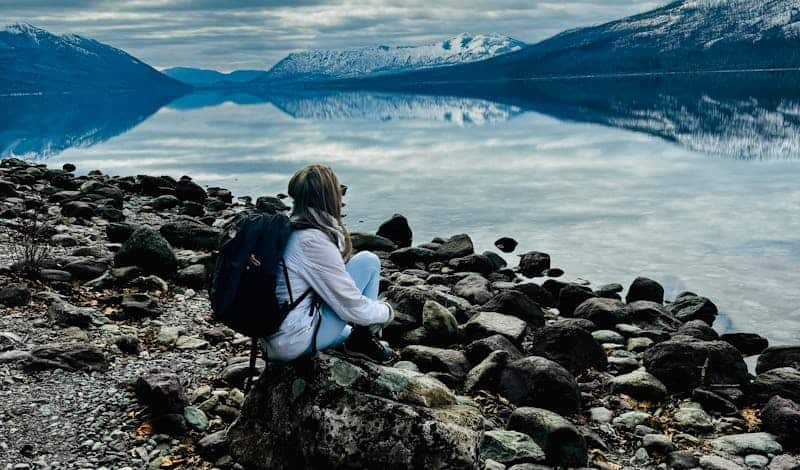
Let’s talk about the thing that keeps a lot of people from ever starting: fear. Especially that 2 a.m. variety, when you’re alone in your tent and the forest is making noises.
Here’s REI’s advice, and it’s gold: when you hear that twig snap in the middle of the night, take some deep breaths, bring yourself back to the present, and think logically. A forest makes all kinds of sounds at night, and the vast majority are completely harmless. Breathe through it. It passes.
And here’s the flip side of staying calm: trust your gut. If a campsite or a situation just doesn’t feel right, listen to that. Experienced solo backpackers pack up and move, or head home, all the time. That’s not failure. That’s a skill.
Worth remembering, too: statistically, the wilderness is one of the safer places you can be. The Washington Trails Association makes exactly this point, that the small risks of solo hiking are well worth taking for the life-changing rewards on the other side.
Because that’s what’s really waiting out there. Not just a nice view. A version of you that’s a little braver, a little more capable, and a lot more sure of what you can handle. Solo backpacking has a way of teaching you that you’re more resilient than you ever gave yourself credit for. Whether you’re three miles up a familiar trail or three time zones from home, you’ll come back changed, in the best way.
So tell someone your plan, pack the right gear, take that first step, and go. Your own solo adventure is waiting.
Works Cited
- REI Co-op. “How to Solo Backpack.” REI Expert Advice. https://www.rei.com/learn/expert-advice/how-to-solo-backpack.html
- REI Co-op. “Backpacking Tips for Beginners: Getting Started.” REI Expert Advice.https://www.rei.com/learn/expert-advice/backpacking-beginners.html
- REI Co-op. “The Ten Essentials for Hiking & Camping.” REI Expert Advice. https://www.rei.com/learn/expert-advice/ten-essentials.html
- REI Co-op. “Sawyer Squeeze Water Filter System.” REI.com. https://www.rei.com/product/103050/sawyer-squeeze-water-filter-system
- U.S. National Park Service. “Staying Safe Around Bears.” https://www.nps.gov/subjects/bears/safety.htm
- U.S. National Park Service. “Storing Food: Bears.” https://www.nps.gov/subjects/bears/storingfood.htm
- Washington Trails Association. “On Unlearning Fear and Hiking Solo.” https://www.wta.org/news/magazine/features/on-unlearning-fear-and-hiking-solo
- Smith, Tom S., Stephen Herrero, et al. “Efficacy of Bear Deterrent Spray in Alaska.” Journal of Wildlife Management (via BearWise). https://bearwise.org/wp-content/uploads/2017/07/efficacy-of-bear-spray-smith-et-al.-2010.pdf
- Counter Assault. “Bear Spray vs. Pepper Spray.” https://counterassault.com/blogs/resources/bear-spray-vs-pepper-spray
- Garmin inReach Mini 2 (product listing). Amazon.com. https://www.amazon.com/Garmin-Lightweight-Satellite-Communicator-Handheld/dp/B09PSKG7C3
- Solo Traveler World. “Travel Insurance for Solo Travelers: Make Sure You’re Protected.” https://solotravelerworld.com/traveling-alone-travel-insurance-is-a-must/
- Solo Traveler World. “Conscious Travel: Tips for Respecting Local Cultures and Communities.” https://solotravelerworld.com/solo-travel-safety-cultural-respect/
- Remitly. “Key Cultural Etiquette Tips for International Travel.” https://www.remitly.com/blog/travel/cultural-etiquette-tips-for-international-travel/
- Hostelworld. “State of Solo Travel 2025.” https://www.hostelworld.com/state-of-solo-travel
- Hotelagio. “25+ Solo Travel Statistics and Trends (2025 Edition).” https://hotelagio.com/solo-travel-statistics/
Note: Product pricing, model availability, permit rules, and statistics change over time. Verify current details with the source before relying on them.

Paul Turner is one of the original writers behind TakeOutdoors, known for his clear, practical guides on camping, hiking, and outdoor gear. Since starting TakeOutdoors, his articles have helped readers choose reliable equipment, understand key outdoor skills, and feel more confident on the trail. Paul’s hands-on approach comes through in every piece he writes, focusing on real experience, simple explanations, and advice that works in the field. His goal has always been to make getting outside easier for anyone who wants to explore.


